The bank card, the default means of payment
Visa and Mastercard cards are accepted almost everywhere in Paris, from the department store to the neighbourhood bakery, often with contactless payment for small amounts. American Express is accepted in only some establishments, in particular tourist and hotel businesses, and remains less universal than Visa/Mastercard: it is best to have a back-up card if your main card is an Amex. Most mobile payment services (Apple Pay, Google Pay) also work wherever contactless is accepted.
The trap to avoid at all costs: dynamic currency conversion (DCC)
This is the most common trap for a foreign visitor in Paris: when paying by card, some terminals offer to charge you "in your home currency" (dollars, pounds sterling, etc.) rather than in euros, displaying an already converted amount. This option, called dynamic currency conversion (DCC), almost always applies an exchange rate considerably less favourable than your bank's, with a margin hidden in the rate displayed. The reflex to adopt: always choose to pay in euros, never in your home currency, even if the terminal insists or presents that option first. Your own bank will then apply its own exchange rate, almost invariably better than the one offered by the terminal.
Withdrawing cash: favour conventional bank ATMs
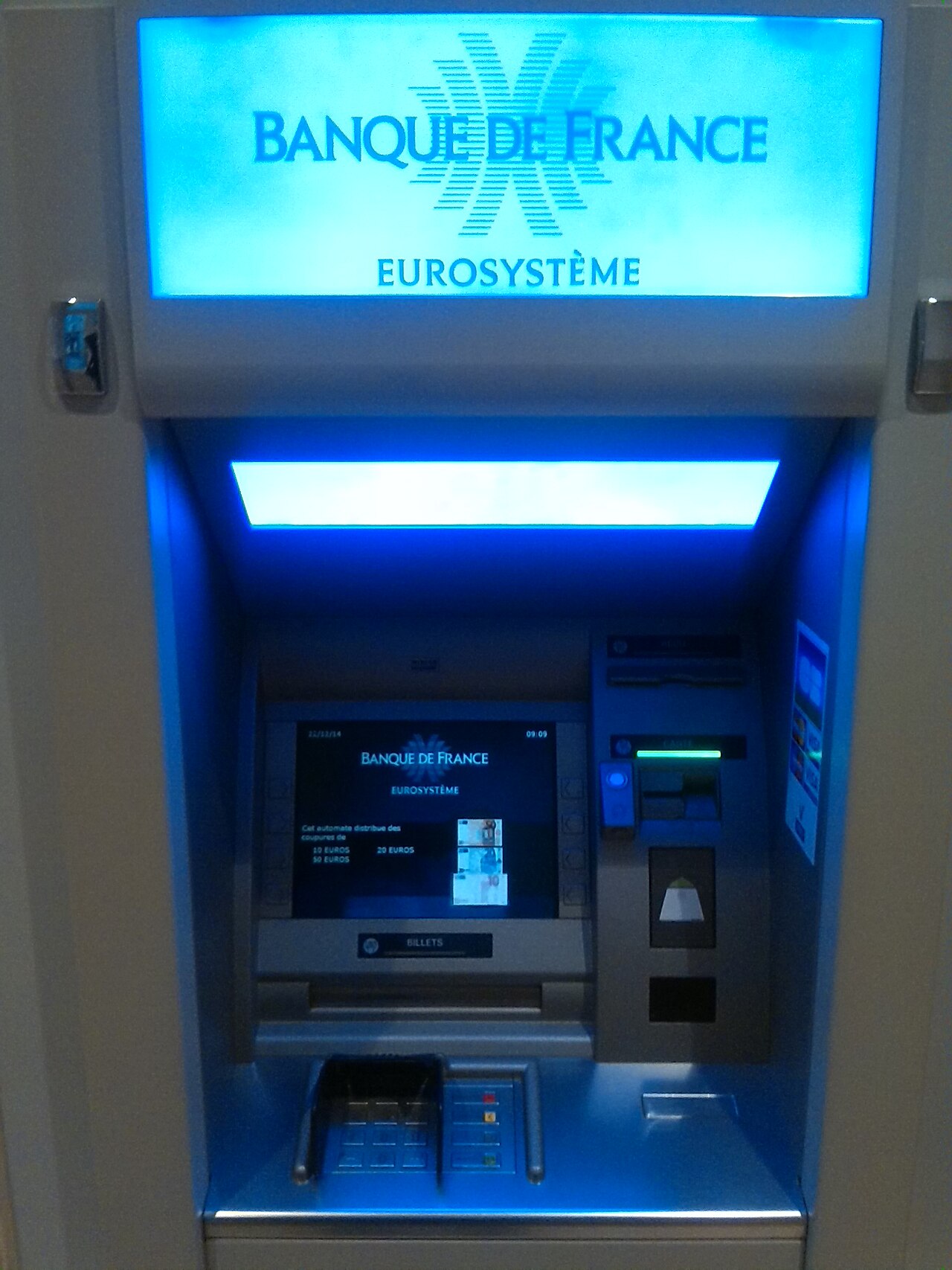
For the rare situations where cash is useful (small markets, some taxis, tips), withdrawing from an ATM remains the cheapest option, provided you choose an ATM attached to a conventional bank (the major French banks have ATMs across the city, especially in tourist areas and near railway stations). The independent ATMs installed in some very touristy areas often charge higher commissions, sometimes barely visible before the withdrawal is confirmed: read the confirmation screen carefully before validating, especially if it too offers a conversion into your home currency (the same trap as with card payments: decline and choose euros).
Bureaux de change: a last resort
Physical bureaux de change, particularly those in the most touristy areas (around the main thoroughfares and railway stations), generally offer less favourable rates than a simple ATM withdrawal with a standard bank card. Unless you have a very specific need (a large sum in cash before a departure, a rare currency), an ATM withdrawal or a direct card payment almost always works out cheaper than a trip to a bureau de change.
Fee-free international payment cards
For longer stays or visitors who often return to the euro zone, international bank cards with no foreign conversion fees (offered by several neobanks) let you pay and withdraw in euros without the fees usually applied by a conventional bank card outside the euro zone. This is an option to look into before departure rather than once you are there.
Small amounts and tipping
Tipping is not compulsory in France: service is legally included in the bill at restaurants, and a cash tip remains an appreciated gesture rather than an obligation. For the details of customs and usual amounts depending on the situation, see our guide to tipping in France.
To stay connected and be able to check your accounts or use a banking app during your stay, see also our guide eSIM or SIM card for visiting Paris, and for the other traps to avoid, our article on scams to avoid in Paris.