
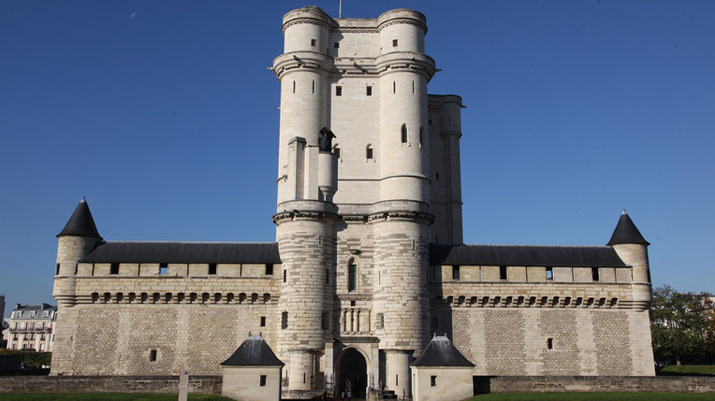
The Château de Vincennes, the only fortified structure in the greater Paris area, is both a marvel of medieval architecture and a symbol of French history. Built in the 12th century so that Louis VII could hunt in the Bois de Vincennes, it was later transformed into a full royal residence by Charles V in the 14th century. The king surrounded it with a wall and had a keep built standing 52 meters tall, which would later become a state prison. The fortress protected the kings, remaining their main residence until 1682. At that time, despite the construction of classical-style royal pavilions, Louis XIV came to prefer Versailles. In the 19th century, Napoleon added towers and casemates for military purposes: the castle's fortress served as barracks and an arsenal to protect the French capital. Occupied from 1940 by the German army, which damaged it in 1944, the château has undergone major restoration work. Today it also houses the headquarters of the Service Historique de la Défense (Defense Historical Service), whose libraries and archives are open to the public.
Highlights
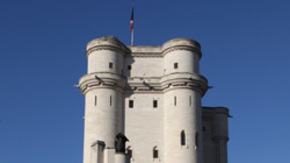
The Keep
The keep is the tallest in Europe and offers an exceptional view over the city of Paris. Built by Charles V to house his art collection and manuscripts, Louis XI began using it in the early 15th century to lock away his most notable prisoners. A state prison from the 16th to the 19th century, it once held Nicolas Fouquet, Diderot, the Marquis de Sade, and Mirabeau.
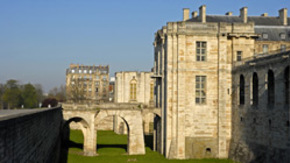
The Curtain Wall
The 1,200-meter rectangular wall is made up of 9 towers roughly forty meters tall and ten sections of curtain wall. It was designed to protect the structures already standing there. Along with the keep, its construction between 1373 and 1380 required the largest building site in Europe.
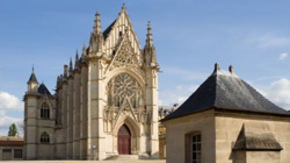
The Sainte-Chapelle
The Sainte-Chapelle has stood since 1379. The building blends Gothic and Renaissance influences. Its nave reflects the introduction of the Gothic style into royal architecture at the end of the 14th century. Built to house certain relics of the Passion, it has been listed as a Historic Monument since 1853. It features choir stained-glass windows by master glassmaker Nicolas Beaurain, dating from the mid-16th century.
Infos pratiques
Tips
Opening hours vary depending on the time of year, so be sure to check the château's official website before your visit. Note that you can't access the keep's upper floors without booking a guided tour. In summer these run daily, but for the rest of the year they take place only on Sundays. Admission is free for those under 25, the unemployed, and people with disabilities.
How to get there
Located at 1 avenue de Paris in Vincennes, you can get there by metro (line 1, "Château de Vincennes" station), RER (RER A: "Vincennes"), or bus (46, 56, 86).
Nearby
Comments
No comments yet.