The metro: the real limit of the stay
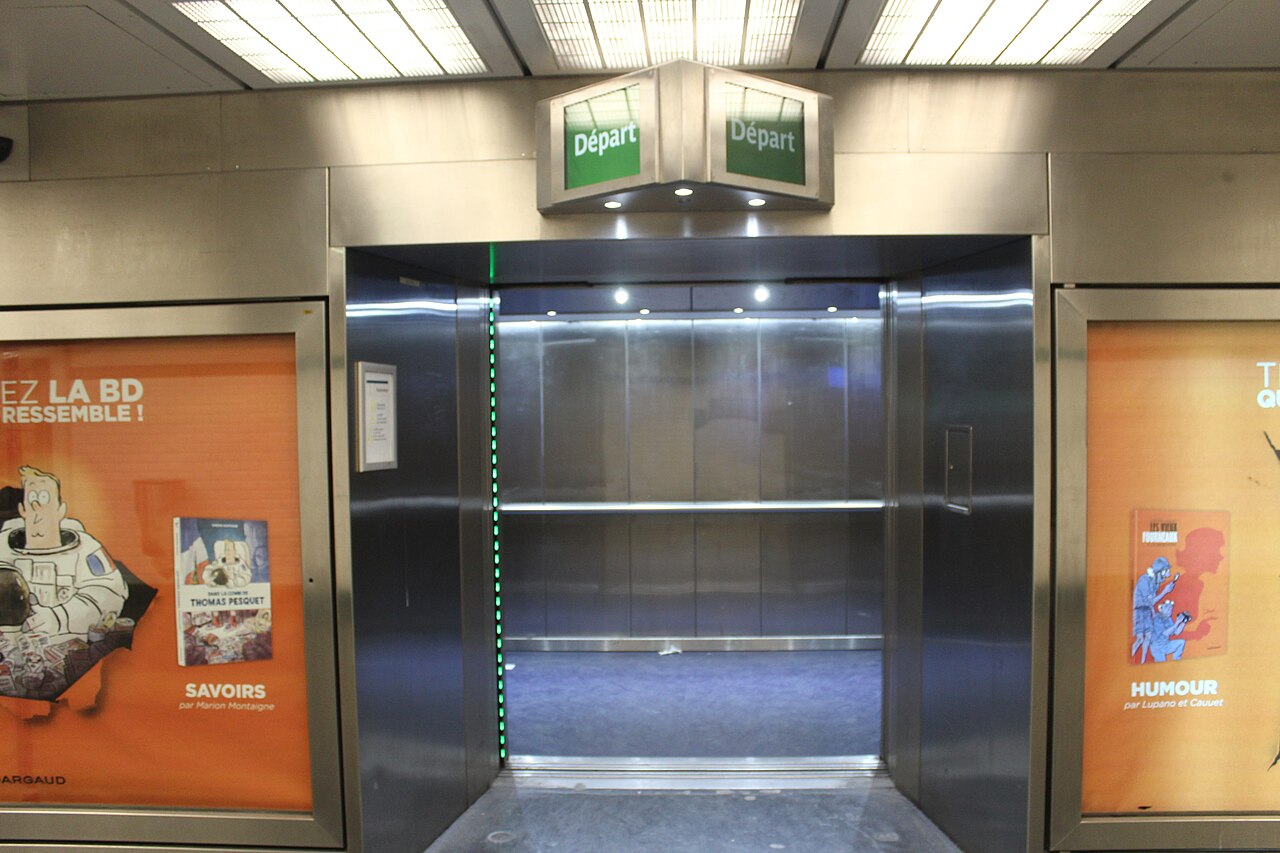
The historic Paris metro network is poorly suited to wheelchairs. Of the roughly 300 stations on the network, only a small minority offer step-free access without stairs: most of the older stations have neither lift nor ramp. Line 14 is the exception: it is the only fully accessible line on the network, with a lift in every station and level boarding between platform and train. On the other lines, even when a station lists a lift, there is no guarantee that the chosen interchange or exit is equipped too: it is best to check station by station rather than line by line.
In practice, this reality leads most wheelchair-using visitors to favour other modes of transport for the majority of their journeys, and to keep the metro for trips where line 14 (or a confirmed accessible station) makes the journey possible from end to end.
The RER, considerably more accessible
The RER network is on the whole much better equipped than the historic metro: the great majority of RER stations are accessible, with lifts and audio/visual announcements on the platforms. It is often the most reliable option for getting quickly from one point to another without depending on an uncertain metro connection, provided you check beforehand the accessibility of the exact departure and arrival stations (and not just of the line). Our guide to the metro and RER in Paris covers the whole network.
The bus, the most consistently accessible option
The RATP bus network is by far the most reliable mode of public transport for a wheelchair user in Paris: almost all Paris buses are fitted with a manual or automatic access ramp and a dedicated space on board. It is generally the best compromise between territorial coverage and real accessibility, even if the stops themselves (pavement, lowered kerb) are not all equipped uniformly from one neighbourhood to another.
The PAM service: door-to-door on-demand transport
For journeys where regular public transport is not enough, Île-de-France Mobilités offers PAM (Pour Aider la Mobilité), an on-demand transport service reserved for people with disabilities or reduced mobility. The principle: an adapted vehicle picks the user up at a specific address and drops them at another, on prior booking (generally in advance, not on the spot). Registration and the precise terms (areas covered, booking lead times, fares) must be checked directly on the service's website before the stay, as they change and may differ for a non-resident visitor.
Monuments and museums: highly variable from site to site
Unlike the metro, most major Paris monuments and museums have made significant accessibility efforts in recent years: lifts, ramps, wheelchair loans on site and reduced or free admission for visitors with disabilities (and often for a companion) are common in the major institutions (Louvre, musée d'Orsay, Centre Pompidou, Eiffel Tower). The actual level of accessibility nevertheless varies a great deal from one site to another, in particular for listed historic monuments (original staircases that cannot be altered): the Sainte-Chapelle, certain parts of Notre-Dame or the elevated viewpoints of the Sacré-Cœur remain partially or completely inaccessible by wheelchair depending on the area visited. Before heading over, it is advisable to check the "accessibility" page of each monument's official website, which generally details precisely which areas are accessible.
Pavements, cobblestones and old pedestrian streets
Beyond transport and monuments, the terrain itself remains a factor to anticipate: the historic districts (Marais, Montmartre, Île de la Cité) have many cobbled streets, narrow or raised pavements and steep slopes, especially around the Montmartre hill. This does not make these districts inaccessible, but it lengthens journey times and calls for a route planned in advance rather than improvised on the spot.
In short: building a realistic itinerary
In practical terms, a realistic wheelchair itinerary in Paris relies above all on the bus and the RER for everyday journeys, keeps the metro for trips where line 14 (or verified stations) is enough, holds the PAM service in reserve as a fallback for the most constrained journeys, and checks the accessibility of each monument case by case before adding it to the programme rather than assuming it will be accessible. To organise your family stay beyond accessibility, see also our guide to Paris with the family.