How to read this Paris tourist map by area
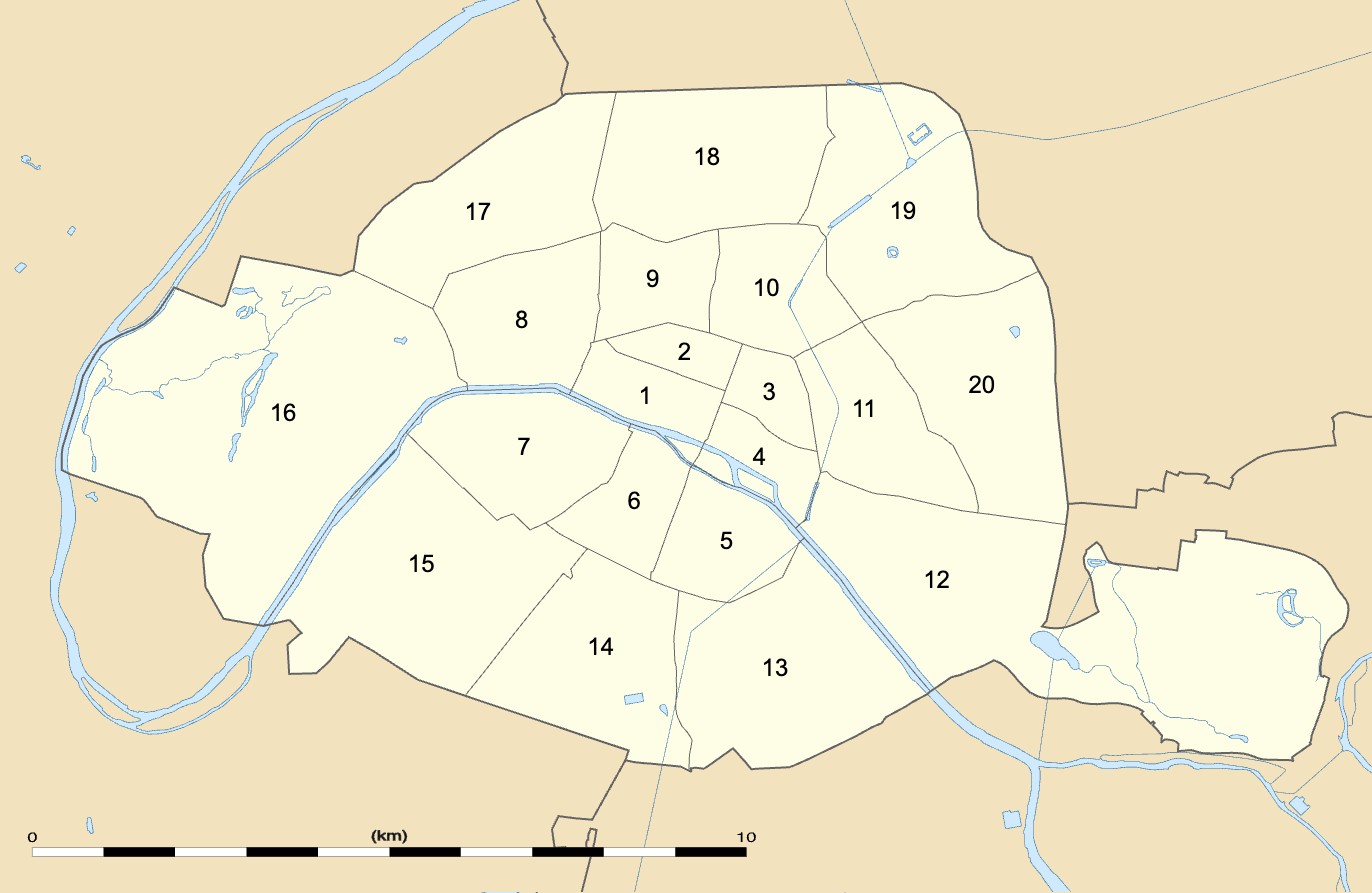
Paris is a compact city: most tourist areas can be crossed on foot in 20 to 40 minutes, and the metro links the rest in a few stops. The best way to organise your days is to choose one area per half-day or full day, rather than criss-crossing the city over and over. This division into areas lets you put together your own route, whatever the length of your stay — for an hour-by-hour method, see also our article on what to do in Paris in one day or our three-day itinerary.
To understand the city's general layout into 20 arrondissements before diving into the detail of each area, our guide to the arrondissements of Paris offers an overview that complements this division into tourist neighbourhoods.
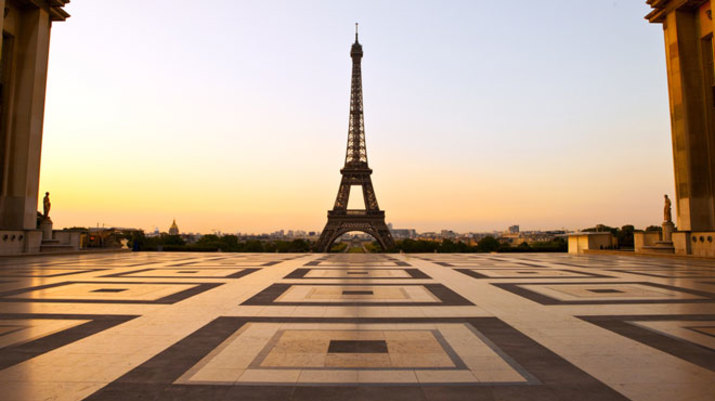
Eiffel Tower, Trocadéro and Champ-de-Mars
The most photographed area of Paris, arranged around the Seine.
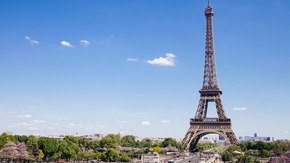
- The Eiffel Tower, unmissable, with its three levels and panoramic view.
- The Trocadéro, directly opposite, for the best overall view of the tower and its fountains.
- The musée du quai Branly, devoted to the arts of Africa, Asia, Oceania and the Americas.
- Les Invalides, with Napoleon's tomb and the Musée de l'Armée.
This area strings together well on foot: allow 15-20 minutes between the Trocadéro and the Eiffel Tower via the pont d'Iéna.
Champs-Élysées, Arc de Triomphe and Grand Palais
The great historic and commercial axis of the Right Bank.
- The avenue des Champs-Élysées, for shopping and atmosphere.
- The Arc de Triomphe, at the top of the avenue, with a clear view over the 12 avenues radiating from the place de l'Étoile.
- The Grand Palais and the Petit Palais, for Belle Époque architecture and temporary exhibitions.
- The place de la Concorde, at the eastern end of the avenue, gateway to the Tuileries garden.
The historic Right Bank: Louvre, Tuileries, Opéra and Palais-Royal
The royal and Haussmannian heart of Paris.
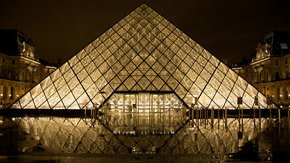
- The Louvre, one of the largest museums in the world, to be allotted at least half a day.
- The Tuileries garden, which extends the Louvre as far as the Concorde.
- The Palais-Royal, with its gardens and arcades.
- The Opéra Garnier, for its architecture and the neighbouring department stores (Galeries Lafayette, Le Printemps).
To extend the stroll through this Haussmannian district, our itinerary around the Opéra Garnier details a complete walking route as far as the place Vendôme and the Grands Boulevards.
Île de la Cité, Île Saint-Louis and the Latin Quarter
The historic cradle of Paris, on both sides of the Seine.
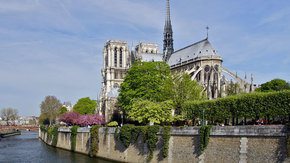
- Notre-Dame de Paris, still under restoration but accessible around its surroundings.
- The Sainte-Chapelle and the Conciergerie, on the Île de la Cité.
- The Île Saint-Louis, for a quiet break between two visits.
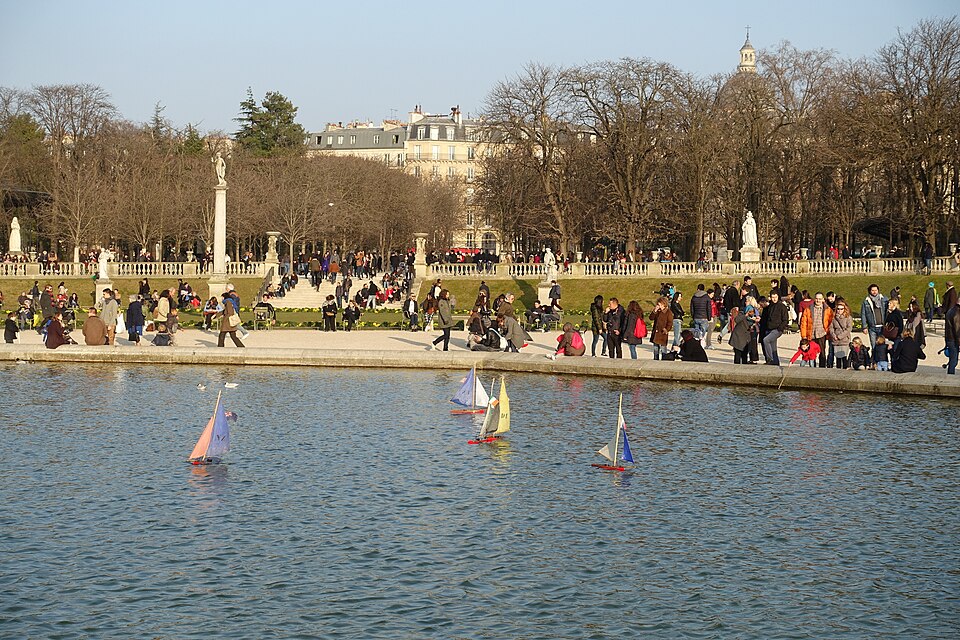
- The Panthéon and the jardin du Luxembourg, on the Left Bank side.
This area lends itself particularly well to a stroll on foot: our dedicated itinerary Île de la Cité and Île Saint-Louis and our complete guide to the Latin Quarter set out a step-by-step route.
Saint-Germain-des-Prés and the Musée d'Orsay
The literary and artistic Left Bank.
- The musée d'Orsay, for the Impressionist collections, directly opposite the Louvre on the other side of the Seine.
- The musée de l'Orangerie, home to Monet's Water Lilies.
- The musée Rodin, with its sculpture garden.
- The Saint-Germain-des-Prés neighbourhood itself, its historic cafés and art galleries — see our complete guide.
Le Marais and Bastille
The historic aristocratic district that has become one of the liveliest in Paris.
- The Marais, for its private mansions, its boutiques and its place des Vosges.
- The musée Picasso and the musée Carnavalet, devoted to the history of Paris.
- The Centre Pompidou, for modern and contemporary art, on the edge of the Marais.
- Bastille, to carry the evening on in its bars and restaurants.
Our complete guide to the Marais details a precise itinerary through this district, rich in little streets to explore on foot.
Montmartre and Pigalle
The Parisian hill, set apart from the rest of the city by its slopes and its village feel.
- The Sacré-Cœur, for the view over the whole of Paris from the forecourt.
- The musée de Montmartre, for the artistic history of the hill.
- The Moulin Rouge, at the foot of the hill, emblem of Belle Époque Paris.
- The Espace Dalí, for lovers of Surrealism.
Montmartre is visited almost exclusively on foot, with a fairly steep climb: our complete guide to Montmartre suggests an itinerary that avoids the steepest streets at the busiest times.
How to link the areas: on foot or by metro
- On foot: favour walking between adjoining areas (Louvre-Tuileries-Concorde-Champs-Élysées form a single continuous axis; so do the Île de la Cité-Île Saint-Louis-Latin Quarter).
- By metro: to move from one distant area to another (for example from Montmartre to the Marais, or from the Eiffel Tower to the Latin Quarter), the metro remains the quickest option. Our guide to the metro and RER in Paris explains how to find your way around the network, and our comparison Navigo or Paris Visite helps you choose the right travel pass for the length of your stay.
- Avoid zigzagging: grouping two neighbouring areas into the same half-day saves considerable time compared with going back and forth to the centre of Paris between each visit.
Organising your tourist map by length of stay
- One day: concentrate on a single major axis (for example Louvre-Tuileries-Concorde-Champs-Élysées-Arc de Triomphe), rounded off with the Eiffel Tower at the end of the day. See the hour-by-hour detail in our article on what to do in Paris in one day.
- Three days: one area per day lets you cover Notre-Dame/Latin Quarter, Louvre/Tuileries/Champs-Élysées, then Montmartre, with the Eiffel Tower slotted in according to your booking times. See our complete 3-day itinerary.
- A weekend: stick to two areas at most, leaving room for meals and breaks — see our guide to a weekend in Paris.
Good to know
- Many museums close one day a week (often Monday or Tuesday depending on the establishment): check each venue's hours before building your route.
- Booking tickets in advance for the most popular sites (Eiffel Tower, Louvre, Sainte-Chapelle) spares you much of the queuing on site — see our article on booking in advance in Paris.
- The Paris Museum Pass can simplify access to several museums and monuments if your route covers a large number of them over a short period.